If you have trees near your home, you have probably wondered if gutter guards are worth it, or if they just turn into a new place for clogs to form. In Minnesota, we see everything from pine needles and helicopter seeds to sudden heavy downpours and long winters that can bring ice and snow load into the mix. The right gutter protection can reduce maintenance and protect your foundation, but the wrong style can overflow, trap debris, or create headaches.
Below, we break down the most common types of gutter guards, what tends to work best in real Minnesota conditions, and how to decide what makes sense for your home.
Why Gutter Guard Performance Matters in Minnesota
Gutters do more than keep water off your siding. When they work the way they should, they carry roof runoff away from fascia boards, landscaping, and your home’s foundation. When they clog or overflow, water can back up and cause problems that cost far more than routine cleaning.
In our area, the biggest stress tests for gutter covers tend to be:
- Heavy Rain That Comes Fast: High-volume storms can overwhelm guards that restrict water flow.
- Pine Needles and Small Seeds: Debris that is skinny or tiny can slip into or through some screen systems.
- Shaded Rooflines: Damp, shaded areas can encourage film and buildup that reduces drainage over time.
- Snow and Ice Cycles: Freeze and thaw can change how water moves at the roof edge and inside the gutter.
Standard Screen Mesh Guards and Why They Often Still Clog
Basic wire or screen mesh guards are common because they are easy to find and often cost less up front. They can block larger leaves, but they can also create two common issues in real-world conditions.
First, small debris like pine needles and helicopter seeds can weave into the screen, especially when they get wet and start to mat down. Second, screens can become a “filter” that slows water down during heavy rain. When water cannot get through fast enough, it can skip over the top edge and dump right where you do not want it.
Micro-Mesh Filters and the Hidden Trade-Off
Micro-mesh systems use a finer screen, sometimes stainless steel, designed to keep out very small debris. In theory, that sounds like the best solution. In practice, the finer the filter, the more likely it is to act like a strainer.
In shaded areas especially, screens can develop a film that causes water to sheet over the top instead of flowing through. When that happens, homeowners can end up with the same overflow problems they were trying to avoid, plus a guard that is harder to clean because the debris is sitting on top of a tight mesh.
How Solid Hood Systems Work Using Surface Tension
Solid hood systems, including curved aluminum hood designs, work differently than screens. Instead of trying to “filter” water through holes, they use a curved surface to guide water into the gutter while encouraging leaves and debris to slide off the front edge.
This approach can be a good fit for Minnesota weather because water is not being forced through a fine filter. That matters when you get heavy rain events, or when roof runoff is moving quickly down steeper roof pitches.
Why High-Flow Design Matters on Steep Roof Pitches and During Downpours
One of the most overlooked parts of gutter guard performance is flow rate. Even a guard that blocks debris well can be a poor choice if it cannot handle the volume of water coming off your roof during a heavy storm.
If your home has a steep roof pitch, long rooflines, or valleys that concentrate runoff, the best gutter protection is the one that can keep up with real water volume. That is where high-flow hood designs can have an advantage because the intake is designed for fast-moving water rather than slow filtration.
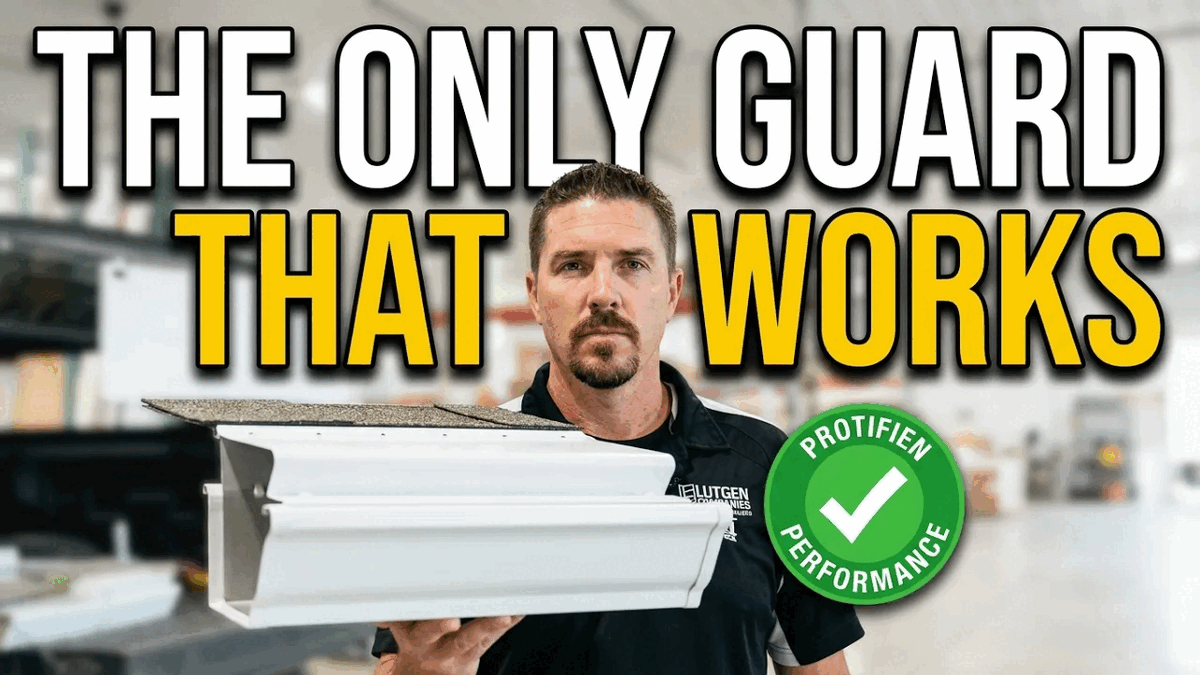
Watch the Video Breakdown From Sean Lutgen
If you want to see these differences explained side-by-side, here is the full video from Sean Lutgen. It covers the most common gutter cover styles, the clog patterns we see, and what tends to perform best in real weather conditions.
Watch Are Gutter Guards Worth It on YouTube
How to Decide What Type of Gutter Guard Is Right for Your Home
There is no one-size-fits-all answer. A system that works well on one home may not perform the same on another depending on tree cover, roof pitch, and how much water your roof sheds during storms.
Here are a few homeowner-friendly questions that help narrow it down:
- What debris do you actually have? Pine needles and small seeds behave differently than large leaves.
- Do you have shaded sections? Shaded runs can stay damp longer, which changes how screens perform.
- Do you get overflow during heavy rain now? If yes, prioritize a solution that maintains flow.
- How comfortable are you with ongoing maintenance? Some systems still need periodic cleaning to keep performance up.
Get Help Choosing Gutter Protection That Works in the St. Cloud Area
If you are comparing options and want a clear recommendation for your rooflines and trees, our team at Lutgen Companies can help you evaluate what fits your home and your budget. You can also explore our related services, including gutter guards in St. Cloud, leaf protection systems, and gutter cleaning in the St. Cloud area.
If you would like an estimate or a practical recommendation based on your specific conditions, reach out and we will help you plan the next step.

Comments